The designs around us go far beneath the surface. Incorporating Indigenous knowledge and cultural storytelling into contemporary and commercial spaces allows those who inhabit or pass through those spaces – even if just for a moment – to experience history, country and culture.
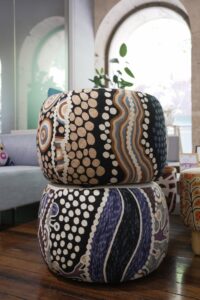 We are delighted that Winya Indigenous Commercial Furniture will be furnishing and styling our inaugural First Nations Design Lounge at Decor + Design & Green Design Show 2026, 15 – 17 July at Melbourne Exhibition Centre.
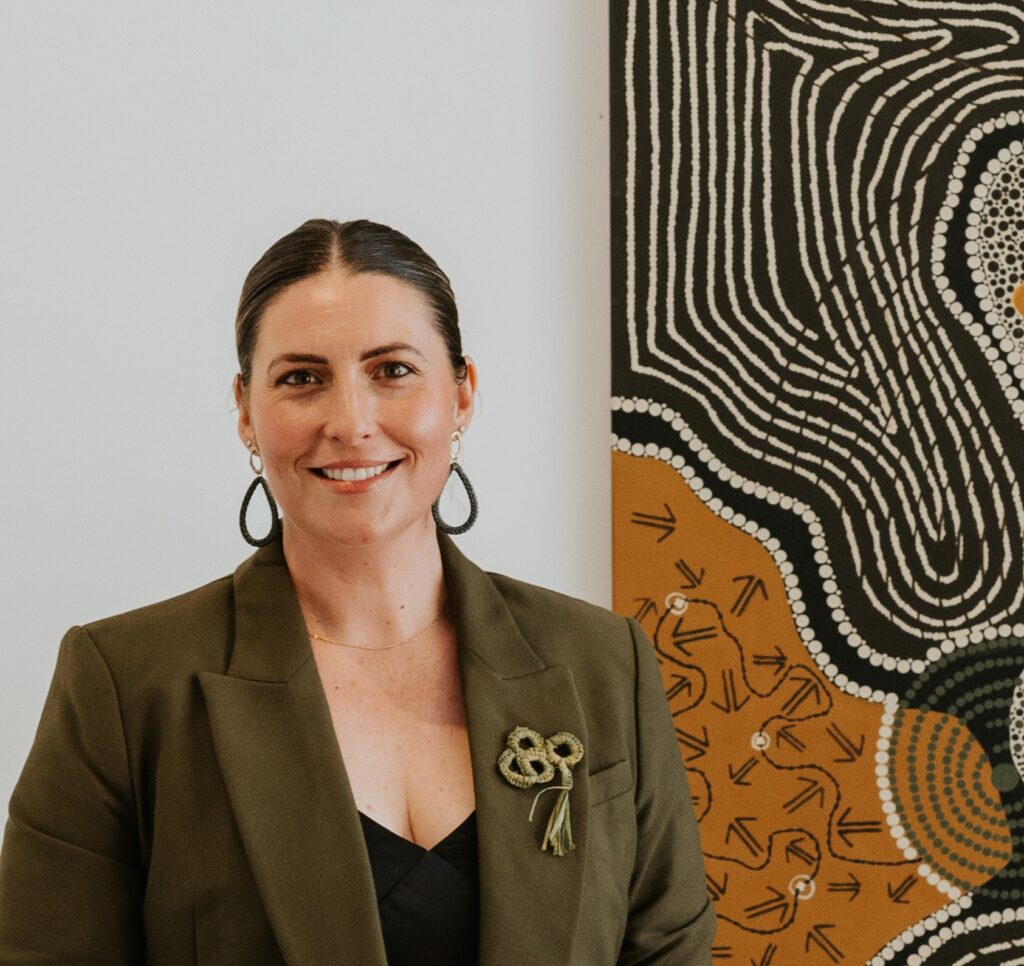
Kylie Monteleone, NSW BDM and Indigenous Engagement Manager at Winya, is herself an artist. We spoke to Kylie about how her approach to her work is grounded in connection to Country, her engagement with Indigenous artists and designers through Winya’s House Artist Program, plus what to expect at the Winya First Nations Design Lounge in 2026!
As a contemporary Aboriginal artist, how does your connection to Country influence your approach to contemporary interior design and colour specification?
The colours of Country initiate a very visceral experience for me, and I believe are critical to creating a comfortable space people want to spend time in. They are deep, warm and rooted in the burnt oranges of the dirt, the neutrals of the tree barks and the burnt umber of the rock formations. These colours and textures are often what I gravitate to as a way of grounding a scheme.
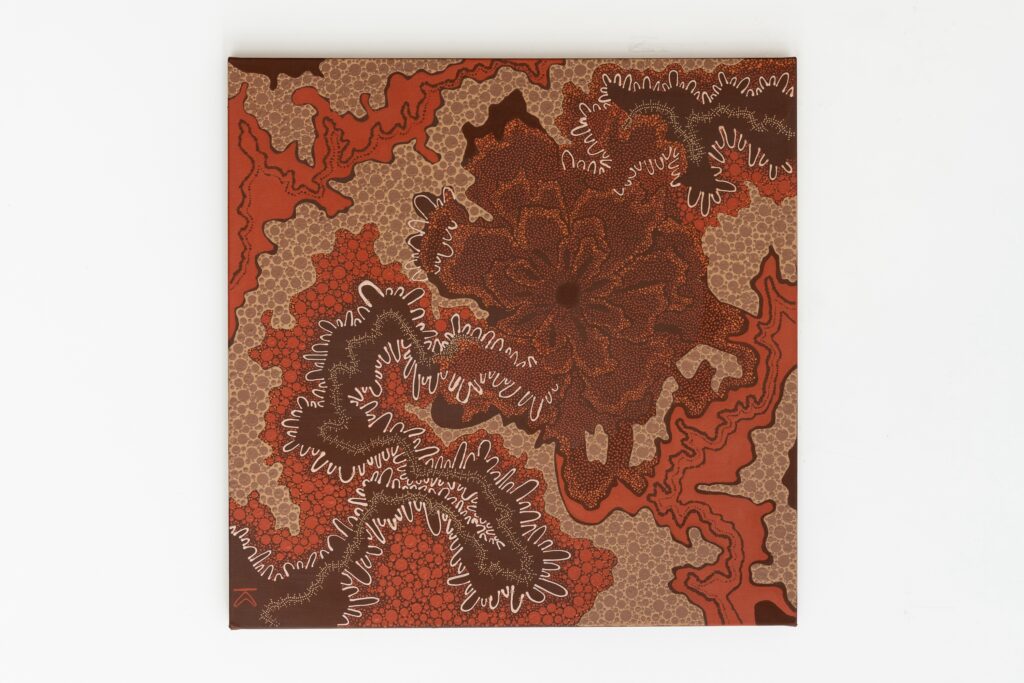
Artwork by Kylie Monteleone
When a built environment is intentionally inspired by elements of Country, it feels more familiar and grounded in something meaningful.
What drew you to work with Winya Indigenous Commercial Furniture, and how does this role allow you to express your cultural and creative vision?
After spending years working by myself, I felt like it was time to step back into a team environment with a business who shared my values professionally, creatively and culturally. Winya’s values in supplying quality furniture, stems beyond just commercial values. The alignment to make a positive impact environmentally and socially is a unique opportunity in the space of design, architecture and construction.
To find myself in a position to learn, share and educate others on how Country can inspire design on large scale commercial projects, whilst supporting Indigenous economic empowerment is a privilege I’m grateful to have.
Part of my role is to liaise directly with Indigenous artists as part of our House Artist Program, providing national opportunity for artists to share their stories and be directly remunerated for their work. My vision is to grow this program, in the hope to have artistic representation from as many Indigenous Countries across the nation as we can. Being able to offer commercial projects the opportunity to showcase Indigenous stories originating from the lands of their project would be a huge win!
Engaging a diverse supply chain, and supporting other Indigenous businesses where we can, expands our reach to support our Indigenous economy just as was the intention when Winya was established back in 2015.
What does it mean to bring Country to the forefront of urban design, and what are some practical ways you achieve this in commercial environments?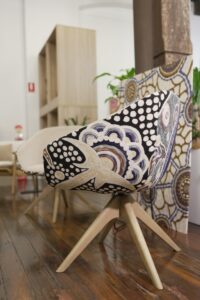
Urban design in our modern world typically focuses on a ‘human-centred design approach’, which means the environment, community engagement, cultural practices, history and ceremony are all put aside . Bringing Country to the forefront repositions the design approach as ‘Country-centred design’ which means that all things are considered and prioritised as equally important in urban design projects.
In a commercial setting, this may mean working with the local Aboriginal Land Council to identify which Country your project is located on, navigating cultural challenges with local Elders / Cultural Advisors to gain knowledge of the traditional people, understanding community needs and cultural practices, acknowledging relevant historical references, and physical landscapes to inspire design and construction in a way that elevates the modern environment.
Can you share an example of a project where your work with Winya created a meaningful cultural connection or transformation in a space?
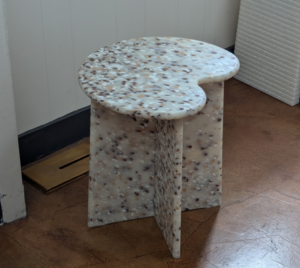 I’m not a furniture designer, but when you’re a natural storyteller working with a team of people who inspire you, it’s hard not to give new things a go, and therefore the ‘Wingara’ range was conceived. The concept of the ‘Wingara’ range derives from Indigenous symbols I typically use on my paintings of people (u-shape) and places (circles). These shapes translated into a set of stools and a table tells the story of people who gather to sit, share and connect with each other. It also celebrates the history of ‘Winya’, which is Wiradjuri language for the phrase ‘sit now’.
This project has enabled me to solidify our shared values and educate those who interact with our products through a hybrid of traditional and contemporary design approaches.
The materials we have chosen for this range are manufactured from processed plastic waste, which supports our Circular Economy program. In being intentional with these selections, the Wingara range tells the story of true sustainable practices supporting a caring for Country mentality.
Who are the artists and designers who inspire you?
I love collecting art and admiring designs from different mediums, genres and platforms, all over the world. Typically, I am drawn to designers and artists who are telling stories through their work. As an Indigenous Artist myself, my work is ultimately visual story telling using symbols and colours, layered like an onion. I love the design work of Kelly Wearstler, Megan Morton and Arent & Pyke, who all have the ability to pull together unexpected colours, creating personalities between walls and layering textures to tell stories.
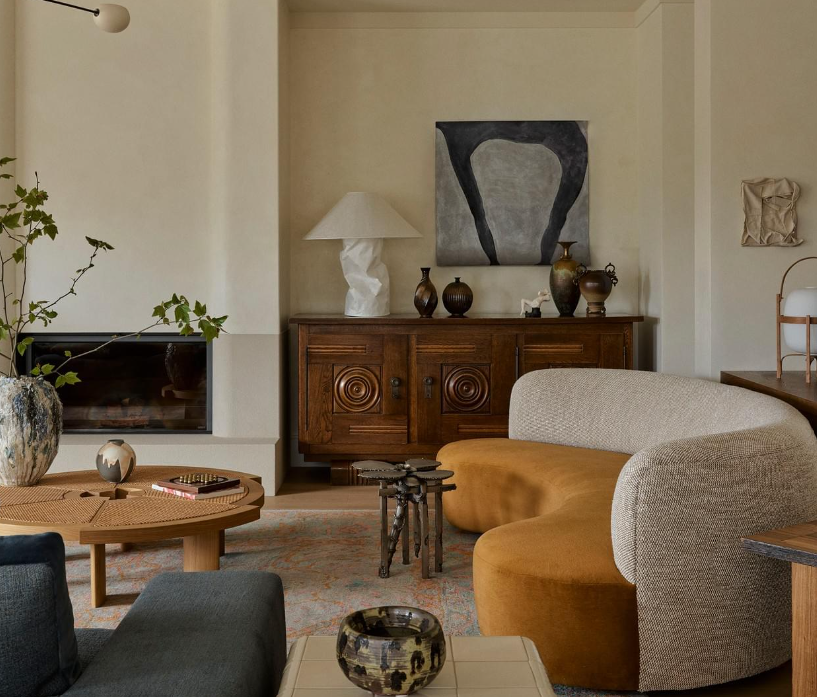
Hawthorn House by Arent & Pyke. Image: Arent & Pyke
Artists who inspire me have this ability to mix colours, play with light and lay things down that captivate the viewer in different ways, such as Brett Whiteley, most mid-century modern European abstract painters, and of course my Mum, Marita, who has taught me all of the foundations to what I build upon in my own practice.
Where do you see Indigenous design practice heading in Australia over the next decade, and what role do you hope to play in that evolution?
The expectation that Indigenous design will remain how we imagine it in our minds is already changing and will continue to adapt over the next decade. We are seeing more Indigenous storytelling through installations such as ‘Aboriginalia’ by Tony Abbot and ‘Family Tree’ by Archie Moore instead of traditional dot paintings that most people visualise when they hear Indigenous Art.
As for how this integrates into design practices, I hope that the concept of ‘Diddiri’ becomes more mainstream, and the practice of deep listening becomes a standard part of the design process in conjunction with appropriate cultural consultation. In our CPD sessions, we share with Architects and Designers examples of how they can be more attuned with cultural considerations and how they can integrate these notions into their own practice in the hope to generate a circular notion of cultural design innovation, rather than a linear practice.
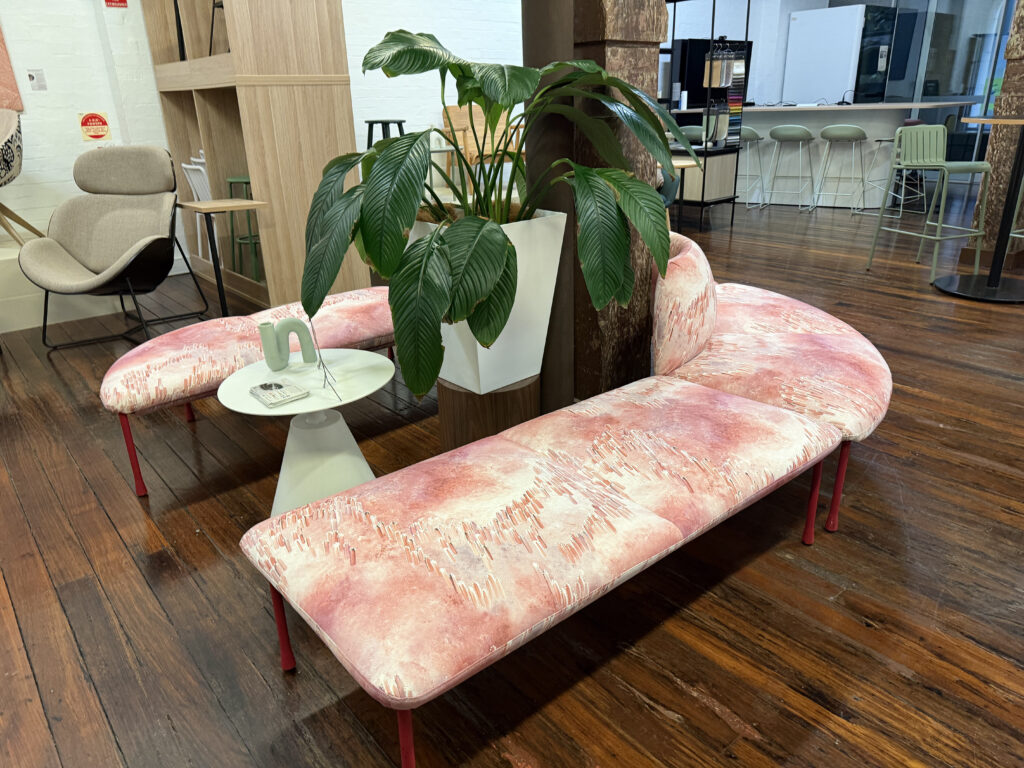
Image: Winya Indigenous Commercial Furniture
What advice would you give to young Indigenous designers or artists who want to honour their culture while building a career in contemporary design?
Be fierce! Know who you are, believe in your truth and trust your judgement. Telling stories can be difficult, especially when they are not your own. Finding support in the people who understand you and your story such as your local community, Indigenous Chambers of Commerce, Supply Nation and Mob doing similar things is critical for connection. I think that the creative space can be both competitive and collaborative simultaneously, you just need to have a place to stand strong to share your story with the world.
We are delighted that Winya Indigenous Commercial Furniture will be furnishing and hosting the first First Nations Design Lounge at Green Design Show 2026 & Decor + Design! What can visitors expect to experience at the Lounge?
The Winya First Nations Design Lounge will be a place to rest, recharge and connect. Furnished with pieces from the Winya House Range rooted in Cultural stories, the featured textiles showcase multiple stories shared by several of our Indigenous Design catalogue artists. There may also be a sneak preview of our new ‘Wingara’ stools on display. We encourage visitors to step in and enjoy a moment of reprieve, whilst connecting with each other and exploring what happens when commercial furniture meets Indigenous Design.
Relax in the Winya First Nations Design Lounge at Decor + Design & Green Design Show 2026, 15 -17 July at Melbourne Exhibition Centre. Register to visit now – entry to the exhibition is free but limited to design trade visitors.